
Year-end reconciliation means matching every account in the books to outside statements dated December 31, or just beyond. That includes bank accounts, credit cards, accounts payable, accounts receivable, payroll, loans, and sales tax accounts. The goal is a set of books you can trust and file from. This article is general information, not tax advice for a specific situation, and filing dates shift year to year, so confirm deadlines for the current tax year.
Table of Contents
- What does it mean to reconcile your accounts before year-end?
- Which accounts need to be reconciled before December 31?
- How do you reconcile bank and credit card accounts step by step?
- What should you check in accounts payable and accounts receivable before closing?
- How do you reconcile payroll before the year ends?
- What else belongs on a year-end reconciliation checklist?
- When year-end reconciliation turns up a multi-state sales tax problem, who can help?
- Key Takeaways
- References
What does it mean to reconcile your accounts before year-end?
Reconciliation means matching internal records against external statements. You compare what your books say to what the bank, credit card company, or vendor statement says, then resolve the differences. According to Murray Moyer, year-end reconciliation ensures internal records match external statements such as bank accounts, credit cards, and vendor invoices.

December 31 is the anchor date because it is the cutoff for the tax year. Closing the books means finalizing all entries through that date so the financial statements reflect a complete, accurate year. Reconciliation is a check against reality, not a redo of the bookkeeping. You are verifying, not rebuilding.
Skipping reconciliation leaves you with records that may not reflect what actually happened. Murray Moyer notes that failure to reconcile can result in penalties or even trigger audits. Inaccurate records also make tax filing harder and business decisions less reliable.
Which accounts need to be reconciled before December 31?
The full set includes bank accounts, credit cards, lines of credit and loans, accounts payable and vendor balances, accounts receivable and customer payments, payroll liabilities, and sales tax and other compliance accounts. Murray Moyer lists these as the core accounts requiring reconciliation before year-end.
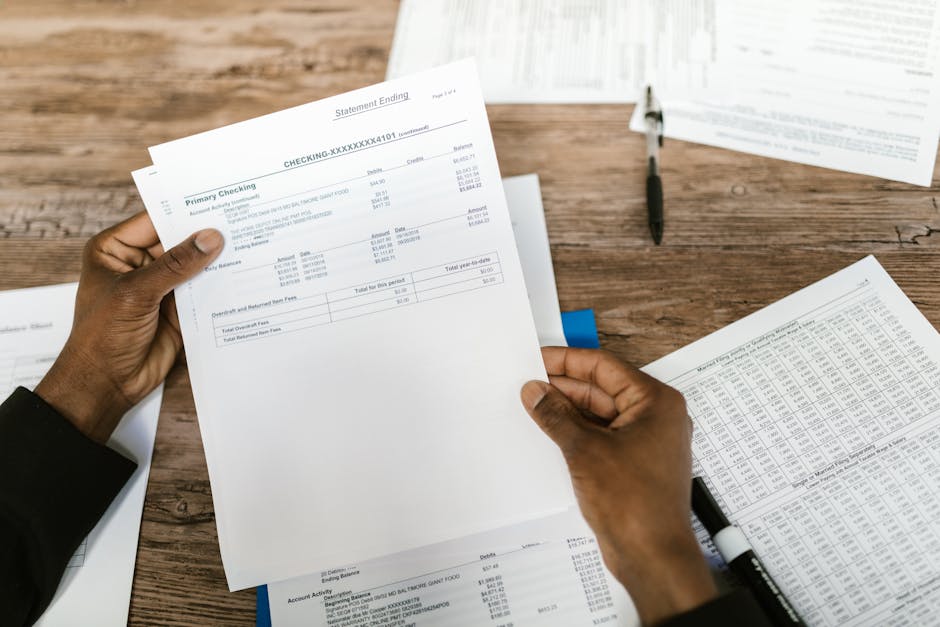
Payment platforms need the same treatment. Spark Business Consulting states that every account, including checking, savings, credit card, line of credit, loans, and even PayPal or Venmo, should be reconciled to the statement ending December 31, or just beyond. These platforms often carry transaction volume that never touches a traditional bank statement.
Each account gets reconciled to its own external statement. The statement date should fall on December 31 or just beyond it, so the closing cutoff is consistent across the entire set of books. Treat every account the same way, whether it is a major operating account or a rarely used payment platform.
How do you reconcile bank and credit card accounts step by step?
Start by gathering bank statements, credit card statements, receipts, and invoices. Then cross-check each transaction against the external statement. Wafeq describes this as gathering the source documents first, then comparing each transaction and adjusting for errors.
Review outstanding checks and deposits separately. These are timing differences, not errors. A check written in December may not clear until January, and a deposit made on December 31 may post after the statement cutoff. Murray Moyer identifies reviewing outstanding checks and deposits as a distinct reconciliation step.
Adjust for bank errors and record anything the books missed. A bank can post a fee, a reversal, or a duplicate charge that never entered your ledger. The reconciliation process catches those items and brings the books current.
Month-end reconciliation uses the same mechanics as year-end. The difference is that year-end adds a hard cutoff and a closing date. Once the year is closed, entries dated before the cutoff should not change without a deliberate reopening.
What should you check in accounts payable and accounts receivable before closing?
Review accounts payable and accounts receivable aging reports and update them before the books close. Spark Business Consulting states that AR and AP aging reports should be reviewed and updated before closing the books at year-end.
Verify vendor statements against recorded balances. Confirm customer balances and payments received. Murray Moyer includes verifying vendor statements and confirming customer balances as part of the year-end checklist.
Flag old or uncollectible receivables and stale payables for a decision. Do not just note them. A receivable that will never be collected or a payable that is no longer owed should be resolved before the books close, so the balance sheet reflects reality.
Identify vendors paid $600 or more for services, not goods, for 1099 purposes. Spark Business Consulting notes that any vendor paid $600 or more for services typically needs a 1099. If the vendor was paid via credit card or a third-party payer such as PayPal or Venmo, a 1099 may not be needed because those platforms issue a 1099-K instead.
How do you reconcile payroll before the year ends?
Confirm every pay period is posted and payroll liabilities are paid or accrued. Spark Business Consulting lists verifying all pay periods are posted and confirming payroll liabilities are paid or accrued as the first payroll finalization steps.
Record final bonuses and commissions paid in December. These amounts affect both payroll tax filings and employee W-2s, so they must land in the correct year.
Reconcile the four quarterly 941s and the annual 940. Spark Business Consulting specifically calls out reconciling all four 941s and the 940 as a required payroll step before closing the year.
Review benefits, 401(k) contributions, and withholdings for accuracy. Employee benefit deductions and employer contributions need to match plan statements and payroll records. Any mismatch should be corrected before the year closes.
What else belongs on a year-end reconciliation checklist?
Match loan balances to lender statements and review fixed assets and depreciation. Murray Moyer includes matching loan balances to lender statements and reviewing fixed assets and depreciation on the year-end checklist.
Confirm all expenses are categorized. Run a trial balance review for negative balances in revenue or expense accounts, unusual account totals, and suspense, clearing, or uncategorized items. Spark Business Consulting identifies these as the specific items to check in a trial balance review.
Generate the final Profit and Loss statement and the Balance Sheet once reconciliation is complete. Spark Business Consulting names these as the final reports to generate after reconciliation. These two statements are the outputs that matter for tax filing and business review.
When year-end reconciliation turns up a multi-state sales tax problem, who can help?
Reconciling sales tax and compliance accounts often surfaces nexus in states where the business never registered. Nexus is the connection that creates a sales tax obligation in a state. Unfiled back returns in those states may follow. Murray Moyer notes that sales tax and other compliance accounts belong in the year-end reconciliation set, and Spark Business Consulting confirms that reconciliation often reveals compliance gaps.
Spencer Accounting Group handles this through Sales Tax Resolution, which includes nexus review, exposure quantification, voluntary disclosure, and getting current with each state. The firm is 100% virtual and serves clients in any state. For owners behind on returns, Back Tax Return Filing sequences catch-up filing for the least disruption, without judgment.
Clean monthly books from Bookkeeping make the next year-end reconciliation uneventful. If reconciliation has surfaced a sales tax problem or a backlog of unfiled returns, book a consultation to see if it is a fit.
Key Takeaways
- Year-end reconciliation means matching internal records to external statements as of December 31 or just beyond.
- Accounts to reconcile include bank, credit card, loans, payables, receivables, payroll, sales tax, and platforms like PayPal and Venmo.
- AP and AR aging reports should be reviewed and updated before the books are closed for the year.
- Payroll finalization includes posting all pay periods, reconciling the four 941s and the 940, and recording December bonuses and commissions.
- Vendors paid $600 or more for services typically need a 1099, though credit card and platform payments may be reported on a 1099-K instead.
- A trial balance review should catch negative balances in revenue or expense accounts and any suspense or uncategorized items.
- The final outputs after reconciliation are the Profit and Loss statement and the Balance Sheet.
References
- Why End-of-Year Bookkeeping Reconciliation Is Essential for Every Business — Murray Moyer
- The Importance of Reconciling Your Accounts Before Year-End — Wafeq
- Your Year-End Reconciliation Checklist — Spark Business Consulting