
Reasonable cause is a facts-and-circumstances test the IRS applies case by case. Qualifying means showing you failed to file, pay, or report accurately for a reason outside your control, and that you fixed the failure promptly once the reason passed. It is not a loophole and not a guaranteed outcome. It is a documented argument, and the documentation is what decides it.
Table of Contents
- What is reasonable cause penalty abatement at the IRS?
- What is a good reasonable cause for penalty abatement?
- What reasons do not qualify for reasonable cause?
- Which penalties can reasonable cause relief actually remove?
- How do you request reasonable cause relief and what should the letter contain?
- How does first-time penalty abatement differ from reasonable cause?
- When should a business owner bring in a specialist for penalty abatement?
- Key Takeaways
- References
What is reasonable cause penalty abatement at the IRS?
Penalty abatement is a request asking the IRS to reduce or remove a penalty that has been assessed. Reasonable cause is the argument that the failure happened because of circumstances outside the taxpayer's control, even though the taxpayer used ordinary business care. The IRS evaluates each taxpayer's facts and circumstances individually rather than against a fixed checklist, according to IRS guidance.

Relief can be requested for penalties in three broad categories: filing returns, paying tax, and accuracy of information reported. Some penalties are excluded from reasonable cause relief, including the estimated tax penalty. A taxpayer who believes they have a reasonable cause argument should gather evidence tied to the specific period and penalty before requesting relief.
This article is general information about IRS penalty relief, not tax advice for a specific situation. A business owner facing an assessed penalty should review the notice and the facts with a tax professional before choosing a path.
What is a good reasonable cause for penalty abatement?
A good reasonable cause is an event outside the owner's control that made compliance genuinely impossible, not merely inconvenient. The IRS recognizes several examples: fire, natural disaster, civil disturbance, inability to obtain records, death, serious illness or unavoidable absence of the taxpayer or immediate family, and IRS system issues that delayed a timely electronic filing or payment, according to IRS guidance.
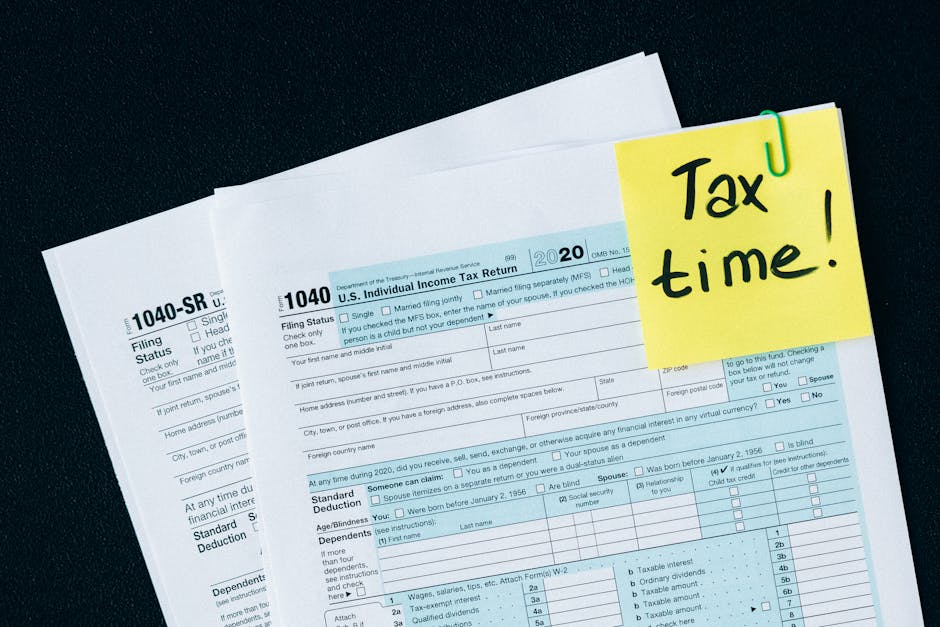
The reason must be tied to the specific penalty and the specific period. A general explanation that the business had a difficult year will not carry the same weight as evidence showing a named event blocked a particular filing or payment. The IRS weighs the taxpayer's efforts to report the correct liability as the most significant factor in determining reasonable cause and good faith, according to The Tax Adviser.
What reasons do not qualify for reasonable cause?
Reliance on a tax professional, lack of knowledge, mistakes and oversights, and lack of funds generally do not qualify as valid reasons for failure to file or pay, according to IRS guidance. These are common explanations, but the IRS treats them as within the taxpayer's control.
Reliance on a preparer is narrow. It must be objectively reasonable, and the taxpayer must have given the adviser all necessary information, according to The Tax Adviser. The IRS's automated reasonable cause decision tool is programmed to deny abatement when reliance on a tax professional is the cited reason, according to Bradford Tax Institute. That argument needs to be built carefully rather than asserted.
Reasonable cause also does not exist if the taxpayer fails to comply within a reasonable period after the circumstances causing the noncompliance end, according to Bradford Tax Institute. The clock starts once the underlying event is resolved.
Which penalties can reasonable cause relief actually remove?
The reasonable cause exception applies to accuracy-related penalties under Section 6662, which are usually 20% of the amount at stake, and to civil fraud penalties under Section 6663 at 75%, according to The Tax Adviser. The exception also reaches failure to file and failure to pay penalties under Section 6651, erroneous refund claims under Section 6676, information return failures under Section 6721, and preparer understatements under Section 6694.
There are carve-outs. Underpayments from transactions lacking economic substance under Section 6662(b)(6) and gross valuation overstatements on charitable property deductions are not eligible, according to The Tax Adviser. Fraud and evasion-related penalties generally cannot be abated, and trust fund recovery penalties must go through an appeal instead, according to Harmon Associates.
The mechanics matter. The failure to file penalty is 5% of unpaid tax per month or part of a month, capped at 25%. The failure to pay penalty is typically 5% of the underpaid amount, capped at 25%. Failure to deposit penalties run 2%, 5%, or 10% depending on how late the deposit was made, according to Harmon Associates.
How do you request reasonable cause relief and what should the letter contain?
The IRS may reduce or remove some penalties by phone using the toll-free number on the notice. If relief cannot be approved over the phone, a written request goes on Form 843, Claim for Refund and Request for Abatement, according to IRS guidance.
The written request must identify the penalty and the period, state the specific facts, connect those facts to the compliance failure, and show that compliance resumed promptly once the event ended. Documentation should match the reason claimed. Records, notices, and third-party evidence of the event carry more weight than a narrative alone.
If a taxpayer applies for reasonable cause and the IRS finds they qualify for first-time abatement instead, the IRS applies first-time abatement, according to IRS guidance. The taxpayer does not need to choose between the two paths up front.
How does first-time penalty abatement differ from reasonable cause?
First-time abatement is a pass on late filing and payment penalties for taxpayers with a clean compliance history, meaning no tax penalties in the three years before the year in question, according to Jackson Hewitt. It is an administrative waiver rather than a facts-and-circumstances argument, which makes it simpler but narrower.
The awareness gap is significant. Reporting has suggested that almost 2 million taxpayers qualify for first-time abatement, but only about 8% request it, according to Jackson Hewitt. The broader context matters too: the IRS assesses roughly 40 million civil penalties a year and abates about 11%, so the path chosen matters.
When should a business owner bring in a specialist for penalty abatement?
Self-representation gets hard when the problem is layered. Multiple states and multiple periods, stacked penalties, a denial already on record, or a nexus question sitting underneath the whole problem all change the work. A single federal penalty with a clean history is one thing. A multi-state sales tax exposure with unfiled returns is a different exercise.
Spencer Accounting Group handles Sales Tax Resolution, including nexus review, exposure quantification, voluntary disclosure, and getting current with each state. The firm also offers Back Tax Return Filing for owners who are behind, sequenced to reach compliance with the least disruption. Spencer Accounting Group is 100% virtual and works with clients in any state, so no office visit is involved.
The outcome of any penalty abatement request depends on the specific facts, the documentation, and the taxpayer's compliance history. No firm can promise a result. The work is in building the argument correctly and matching it to the right relief path.
Key Takeaways
- Reasonable cause is decided case by case on the taxpayer's specific facts and circumstances, not against a fixed checklist.
- Recognized reasons include fire, natural disaster, civil disturbance, inability to obtain records, death, serious illness or unavoidable absence, and IRS system delays.
- Reliance on a tax professional, lack of knowledge, mistakes, and lack of funds generally do not qualify for failure to file or pay.
- The reasonable cause exception reaches accuracy-related, civil fraud, failure to file and pay, erroneous refund, information return, and preparer penalties, with specific carve-outs.
- Relief can sometimes be granted by phone, but a written request goes on Form 843, Claim for Refund and Request for Abatement.
- First-time abatement is a separate administrative waiver for taxpayers with a clean three-year compliance history, and the IRS applies it if the taxpayer qualifies.
- Reasonable cause ends when the taxpayer fails to comply within a reasonable period after the underlying circumstances are resolved.
References
- Penalty relief for reasonable cause — IRS, date unknown
- Common sense and reasonable cause for IRS penalties — The Tax Adviser, October 2020
- Secrets to IRS Penalty Forgiveness Using Reasonable Cause — Bradford Tax Institute, February 2021
- Five Reasons the IRS Abates Penalties — Jackson Hewitt, June 2021
- IRS Relief for First-Time Penalty Abatement & Reasonable Cause Penalty Abatement — Harmon Associates, date unknown